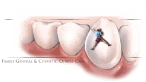


You rinse after brushing and there is a little pink in the sink. Nothing hurts, so it is easy to put down to brushing too hard and move on. Healthy gums do not bleed from normal brushing or flossing, though. Bleeding is usually the first sign that the gums are inflamed, and it tends to show up long before anything hurts.
This is a plain guide to what bleeding gums usually mean, what you can do about it at home, and when it is time to book a visit at our office in Holladay.
Why gums bleed
The most common cause is plaque, the soft film of bacteria that builds up along the gumline every day. If it is not cleaned away, it irritates the gums and makes them swollen and quick to bleed. Plaque that stays put hardens into tartar, which a toothbrush cannot remove.
Other things can make gums more likely to bleed:
- Hormonal changes, including pregnancy
- Some medications, such as blood thinners
- Diabetes
- Tobacco use, which raises the risk of gum disease
- Starting to floss again after a long break. This kind of bleeding often settles within a week or two of daily flossing.
The early stage and the later stage
Gum disease has two broad stages, and the difference between them matters.
The early stage is gingivitis. The gums are red, a little puffy and bleed easily. The bone and tissue that hold the teeth in place are not yet affected. With a professional cleaning and steady care at home, gingivitis can usually be reversed.
The later stage is periodontitis. The inflammation moves below the gumline and starts to damage the support around the teeth. Gums can pull back, teeth can begin to feel loose, and that lost support does not grow back. It can be managed, but not undone.
The stage where this is reversible is also the stage where it does not hurt yet. That is why bleeding is worth paying attention to, even when everything else feels fine.
Signs it is time to book a visit
- Bleeding that continues for more than two weeks of careful brushing and flossing
- Gums that are red, swollen or tender
- Bad breath that does not go away
- Gums that look like they are pulling back from the teeth
- A tooth that feels loose, or a bite that feels different
What you can do at home
- Brush twice a day with a soft-bristled brush, angled toward the gumline.
- Clean between your teeth once a day with floss or an interdental brush.
- Do not stop brushing an area because it bleeds. Gentle, thorough cleaning is what calms it down.
- If you smoke or use tobacco, cutting back helps your gums as well as the rest of you.
Home care removes plaque. It cannot remove tartar once it has hardened. That part takes a professional cleaning.
What happens at a cleaning and exam
At Pinnacle Dental, a dental cleaning and exam starts with our team cleaning away plaque and tartar, including along the gumline where bleeding begins. Dr. David S. Cannon then examines your teeth and gums. If he finds anything that needs attention, he explains what he sees and what your options are before anything else happens.
It is done gently and without a lecture, even if it has been a very long time since your last visit. Everyone on our team speaks Spanish.
If cost has kept you away, we accept a number of insurance plans, offer CareCredit, and have an in-office membership plan for patients without insurance. The details are on our financial options page.
Our office is at 1434 East 4500 South, Suite #202, in Holladay, a short drive for our Millcreek patients as well.
Common questions
Is it normal for gums to bleed when I floss?
It is common, but it is not a sign of healthy gums. If you have just started flossing again, give it a week or two of daily flossing. If the bleeding continues after that, have it looked at.
Should I stop flossing if my gums bleed?
No. Stopping lets more plaque build up, which makes the bleeding worse. Keep going, gently.
Can gum disease be reversed?
In the early stage, usually yes, with a professional cleaning and good care at home. In the later stage it can be managed but the lost support does not return, which is the reason to act early.
How often should I have a cleaning?
For most people, a cleaning and exam every six months. Dr. Cannon may suggest a different schedule based on what he sees.
If your gums have been bleeding, call Pinnacle Dental at 801-274-3889 or request an appointment online.